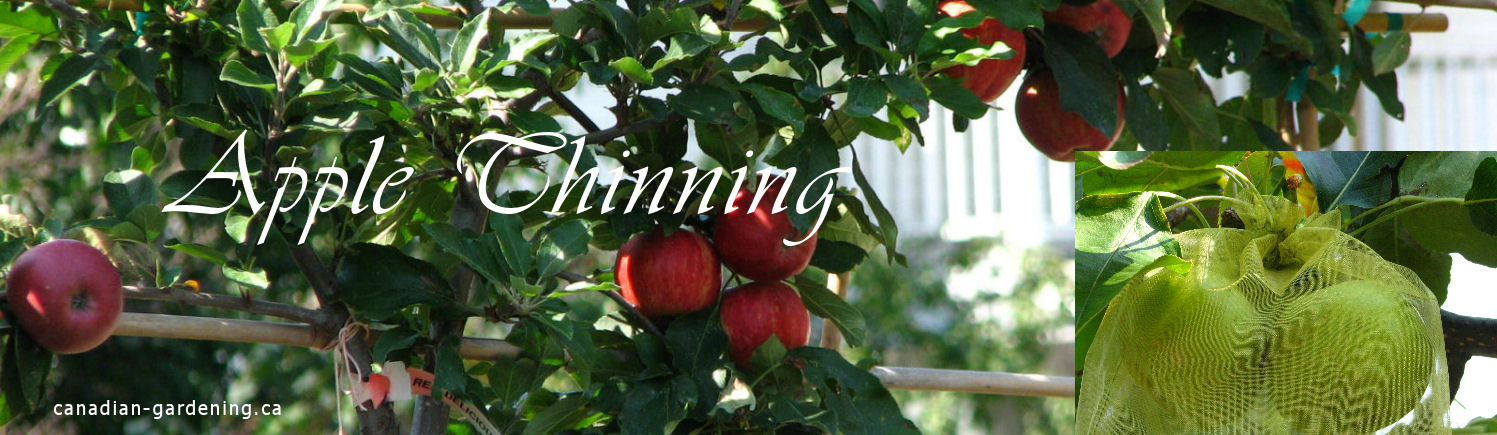
Apple tree with developing fruit in a backyard orchard

Apple Tree Thinning Guide

Managing fruit load in a real backyard orchard

Thinning apple trees is about managing how much fruit the tree carries so the remaining apples grow stronger and healthier. In backyard settings, this process often happens partly on its own through weather, insects, and wildlife.
After thinning fruit, I bag my fruits. It helps with insect and wildlife damage.

What Thinning Actually Does

Thinning reduces the number of developing apples so the tree can put more energy into fewer,
better-quality fruit. This improves size, reduces branch stress, and helps
prevent weak or uneven crops.

  • Improves fruit size and quality
  • Reduces branch overload
  • Helps prevent biennial bearing (heavy/light cycles)
  • Improves airflow and light between fruit

Thinning in a Backyard Orchard (The Real Version)

In commercial orchards, thinning is done carefully by hand.
In a backyard, it often happens naturally.
Weather, insects, and wildlife all contribute to reducing fruit load.

It’s common to see apples naturally drop during early summer.
Birds, squirrels, and even insects like wasps can also reduce fruit numbers as the season progresses.

  • Natural drop is normal and expected
  • Wildlife often removes some of the best fruit
  • Weather events (wind, frost) also reduce load
  • Backyard thinning is usually partial, not complete control

When You Actually Need to Step In

Most backyard trees don’t need perfect thinning, but intervention can help when fruit clusters are too dense.

  • Branches bending heavily under fruit load
  • Clusters of apples touching or overcrowded
  • Small, uneven fruit developing in dense areas
  • Young trees carrying more fruit than they can support

Simple Backyard Thinning Approach

In most cases, thinning does not need to be precise.
The goal is simply to reduce crowding, not achieve perfect spacing.

  • Leave one or two apples per cluster where needed
  • Focus on overloaded branches first
  • Prioritize removing smaller or damaged fruit
  • Work gradually rather than all at once

Working With Natural Thinning

Backyard orchards rarely behave like controlled systems.
Natural thinning from wildlife and environmental factors is part of the process and should be expected.

The goal is not to override nature, but to step in only when the tree clearly benefits from light adjustment.

No. Many backyard trees self-thin naturally through fruit drop and wildlife activity.

Fruit may be smaller and branches can become overloaded in heavy years, but trees often compensate naturally.

Usually early to mid-summer after natural fruit drop has started.

Thinning Apples:

I wait for the June drop. :)
I look at what's left after the drop and then I thin the fruit to two fruits per cluster.
Then I use a fruit bag and cover the individual fruits.
I knew that I had to protect my fruit from the wildlife, but I was surprised to see how much fruit the wasps can eat by the end of the day

Quick Facts
  • Thinning improves fruit quality, not just yield
  • Backyard orchards naturally self-thin
  • Wildlife is part of the thinning process
  • Intervention is optional, not mandatory every year

Apple Tree System


πŸ‘‰ Join our Gardening Forum
If you're unsure about frost dates, planting times, or what works in your garden, this is the best place to ask.
I’ll be there as your gardener, cook and admin - sharing real-world experience, not just textbook answers.
Beginner questions are absolutely welcome. You don’t need to be experienced to get helpful answers.
Posts are answered publicly so other gardeners can learn from your question too - and you’ll often get more than one perspective.
πŸ‘‰ Visit the Garden Forum - quick replies and a growing Canadian gardening community


Site support: Advertising helps support canadian-gardening.ca and keeps the site free for everyone.