Apple tree pruning in a Canadian backyard

Apple Tree Pruning Guide

Shaping growth, improving fruit, and managing your tree over time

Pruning apple trees is less about cutting and more about guiding how the tree grows. In a backyard setting, small yearly adjustments usually matter more than heavy pruning.

Most apple trees respond well to steady seasonal care, and over time pruning improves structure, light, airflow, and fruit quality.

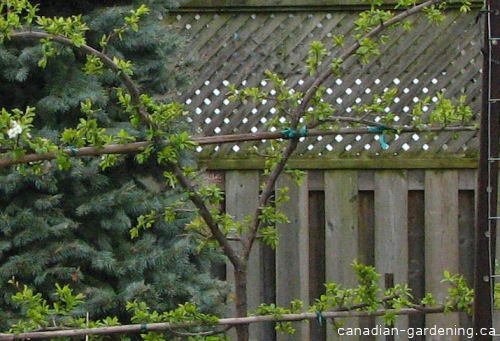
Apple tree structure and branching

What Pruning Is
Really Doing

Pruning is how you guide the long-term shape and strength
of your apple tree. In a backyard orchard, it is less about
perfection and more about balance and light.

  • Improves light reaching all parts of the tree
  • Reduces overcrowding and weak growth
  • Supports branches carrying fruit load
  • Keeps tree size manageable over time

When to Prune

Apple trees are best pruned during dormancy when the tree is not actively growing.

  • Late winter to early spring is the main pruning window
  • Prune before buds begin to open
  • Avoid pruning during extreme cold snaps
  • Light summer pruning can help control growth if needed
Identifying branches to prune on apple tree

What to Look For

Before making any cuts, step back and look at the overall
structure of the tree. Most pruning decisions become obvious
when you focus on flow and spacing.

  • Dead or damaged branches
  • Branches that cross or rub
  • Dense areas blocking light and airflow
  • Weak or downward-growing branches

Basic Cuts That Matter

Good pruning does not require complex techniques. In most backyard settings, small, consistent
adjustments work better than heavy cutting.

  • Start by removing dead or diseased wood
  • Open up crowded areas gradually
  • Maintain a balanced overall structure
  • Avoid removing too much in a single season

Tools and Good Habits

  • Use sharp, clean pruners for smooth cuts
  • Loppers or saws for thicker branches
  • Make cuts just outside the branch collar

If you are working on diseased wood or moving between trees, it helps to clean tools periodically with a diluted disinfectant
solution to reduce the chance of spreading problems.

What to Expect Over Time

Pruning is not a one-time fix. It is a gradual process that improves the tree year by year.

  • Year one improves structure and balance
  • Following years improve light and airflow
  • Fruit quality and consistency increase over time

Apple trees become easier to manage as both the tree and the gardener learn the pattern.

Late winter to early spring, before buds begin to open, is the best time for most pruning.

Yes, but only light pruning to control growth. Major pruning is best done during dormancy.

Less is better. Small yearly adjustments are healthier than heavy pruning in one season.

Pruning:

Proper pruning will encourage earlier fruit bearing and help control diseases. Fruit and foliage on properly spaces branches dry more quickly after rain or humid weather. Pruning will reduce the spread of fungal disease that can ruin the fruit as well as the tree. It’s important to clean your equipment with 10% bleach solution for dipping equipment as you prune to prevent diseases from spreading.

Pruning for strength and yield:

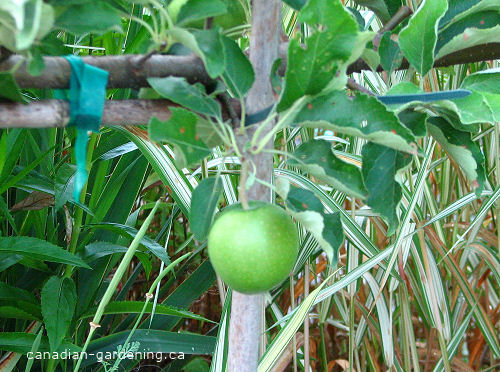
Fruit trees must be able to withstand the weight of heavy fruit loads. Branch angle also affects fruit yield. Branches growing at 45 to 60 degree angle will have more flowers and fruit. Make sure you're paying attention where the fruit spurs are. They are short stubby branches that grow from secondary scaffolds and they can bear fruit for many years.

Water sprouts and suckers:

Water sprouts are fast growing branches that arise on the branches and grow straight up, producing little or no fruit. I remove those as I find them or in the summer.

Pruning styles:

I usually go with the open centre by removing the centre leader. One of my main reasons for removing the centre leader is that I want my fruit to be at arms’ reach for picking. It takes several seasons to properly train a central leader tree, but it’s worth the effort. The first few years of training is to encourage sturdy branching structure.

Quick Facts
  • Best done in late winter dormancy
  • Focus on structure, not perfection
  • Remove dead, crowded, and weak growth
  • Small yearly pruning is most effective

Explore Apple Trees


πŸ‘‰ Join our Gardening Forum
If you're unsure about frost dates, planting times, or what works in your garden, this is the best place to ask.
I’ll be there as your gardener, cook and admin - sharing real-world experience, not just textbook answers.
Beginner questions are absolutely welcome. You don’t need to be experienced to get helpful answers.
Posts are answered publicly so other gardeners can learn from your question too - and you’ll often get more than one perspective.
πŸ‘‰ Visit the Garden Forum - quick replies and a growing Canadian gardening community


Site support: Advertising helps support canadian-gardening.ca and keeps the site free for everyone.