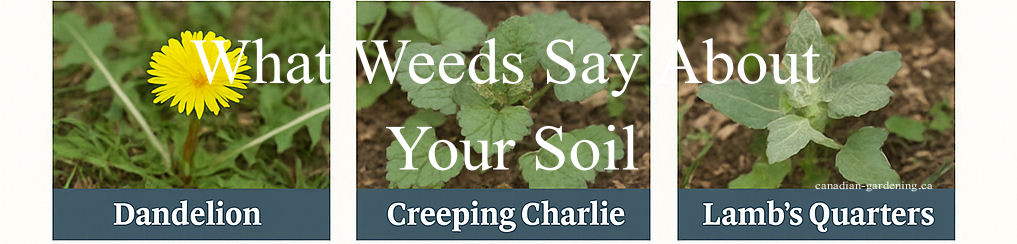
What Weeds Say About Your Soil
Know your Garden Naturally
Not all weeds are bad news. Many are nature's way of telling you something about your soil — whether it's too compacted, too acidic, lacking nutrients, or poorly drained. When you learn to read these signals, you can diagnose and improve your garden soil naturally, without relying on expensive tests or guesswork.
This guide will help you identify common weeds found in Canadian backyards and what they reveal about the growing conditions around them. Scroll down to explore our weed ID chart and discover natural ways to fix underlying soil problems.
1. Soil pH and Weeds
Acidic Soil (Low pH)
- Sorrel (Rumex acetosa)
- Moss
- Sheep sorrel
- ➤ Indicates pH below 6.0
Alkaline Soil (High pH)
- Chickweed
- Queen Anne's Lace
- ➤ Indicates pH above 7.5
2. Soil Fertility
Low Nitrogen or Depleted Soil
- Plantain (Plantago major)
- White clover (can fix nitrogen but also thrives in low-nitrogen soils)
- Wild carrot (Queen Anne's Lace)
- ➤ Suggests need for compost or slow-release nitrogen inputs
High Nitrogen / Rich Soil
- Lamb's quarters
- Pigweed
- ➤ Often found in compost-rich or heavily fertilized soil
3. Soil Compaction
Compacted Soil (low air flow, poor structure)
- Plantain
- Knotweed
- Dandelions
- ➤ Indicates need for aeration, organic matter, or reduced foot traffic
4. Moisture & Drainage
Wet or Poorly Drained Soil
- Willowherb
- Creeping buttercup
- Rushes
- ➤ Suggests drainage improvement or reduced watering
Dry or Drought-Prone Soil
- Spurge
- Russian thistle
- Crabgrass
- ➤ Indicates dry conditions or compacted topsoil
5. Herbicide Residue Indicators
- Stunted, twisted, or distorted plant growth
- Patchy failure of germination in otherwise healthy soil
- ➤ May indicate residual herbicides (e.g., triclopyr, picloram)
6. Surface Coverage & Mulch Integrity (NEW)
Surface Gap / Disturbance Indicators
- Oxalis (Creeping Woodsorrel)
- Early-stage chickweed
- Spurge
- ➤ Indicates exposed soil, thin mulch, or recent disturbance
What this means
- Soil is not necessarily poor — it is exposed
- Weeds are responding to light and open space at the surface
- Often appears after weeding, rain events, or mulch breakdown
Recommended response
- Reinforce mulch layer
- Increase plant density to reduce gaps
- Minimize time that soil is left uncovered
7. Disturbance & Nutrient Imbalance Indicators
Mixed Signal Weeds (context-dependent)
- Black medic
- Dandelion
- White clover
- ➤ Indicates a combination of disturbance, soil imbalance, or generalist conditions
What this means
- These weeds do not point to a single soil condition
- They often appear in repeatedly disturbed or partially managed areas
- Interpret alongside other weeds in the same zone
8. Common Backyard Weeds in Canada
and What They Indicate
| Weed Name | Soil Clue | Conditions They Love | Zones Commonly Found | Signal Strength |
|---|---|---|---|---|
Dandelion |
Compacted soil, low calcium, wide tolerance | Disturbed lawns, foot traffic areas | All zones | Moderate |
White Clover |
Low nitrogen soil | Sunny, well-drained lawns | Zones 3–7 | Moderate |
Broadleaf Plantain |
Compacted, wet, or acidic soils | High traffic areas, poor drainage | Zones 2–7 | Strong |
Purslane |
Fertile, loose, well-drained soil | Hot, sunny garden beds | Zones 4–9 | Moderate |
Moss |
Acidic, wet, shaded, compacted soils | Low light, poor drainage areas | Zones 3–8 | Strong |
Bindweed |
Disturbed, variable fertility soil | Edges, fences, neglected beds | Zones 4–8 | Strong |
Horsetail |
Acidic, poorly drained clay soil | Wet, heavy soils and ditches | Zones 3–9 | Strong |
Chickweed |
Moist, fertile, organic-rich soil | Cool, semi-shaded garden areas | Zones 2–7 | Moderate |
Lamb's Quarters |
Rich, fertile, well-structured soil | Compost-rich cultivated beds | Zones 3–8 | Strong |
Oxeye Daisy |
Low fertility, compacted soils | Dry, open, unmanaged areas | Zones 3–7 | Moderate |
Black Medic |
Disturbed soil, low nitrogen, edge zones | Thin lawns, compacted or repeatedly disturbed areas | Zones 3–8 | Moderate–Strong |
🌿 Tips for Canadian Gardeners:
- Many of these weeds persist due to soil imbalance or poor structure—not just lack of weeding.
- Use compost, mulch, and lime strategically to amend soil where appropriate.
- Use cover crops or ground covers to reduce weed-friendly bare patches.
Have Questions?
Join us at Gardening & Cooking ForumSite support: Advertising helps support canadian-gardening.ca and keeps the site free for everyone.
canadian-gardening.ca
copyright © BPR - December 31, 2021 - All rights reserved
copyright © BPR - December 31, 2021 - All rights reserved