🌿 New for 2026: Canadian Gardeners - Fall Chores
👉 Join our Gardening ForumNot sure what to plant in your zone? Ask here - I'll help you figure it out.
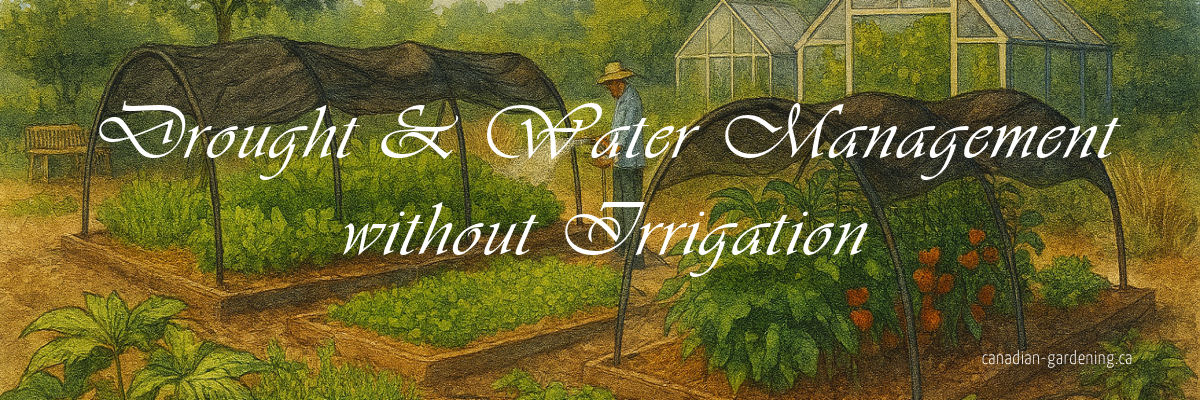
Drought & Water Management Without Irrigation
Keep Your Garden Thriving Even in Dry Conditions
Not everyone wants—or can use—irrigation systems. There are smart ways to keep your garden healthy while conserving water and saving time.
Mulching is Your Best Friend
Mulch keeps the soil cool, slows water evaporation, and suppresses weeds. Use straw, shredded leaves, wood chips, or compost to protect the roots.
Plant Selection Matters
- Choose drought-tolerant plants suited to your region.
- Group plants with similar water needs together (microplanting).
- Perennials often survive dry spells better than annuals once established.
Water Wisely Without Irrigation
- Hand-water deeply at the soil level rather than spraying leaves.
- Water early morning or late evening to reduce evaporation.
- Collect rainwater in barrels or buckets for targeted watering.
Shade & Microclimates
- Use shade cloth or strategically plant taller crops to shade smaller ones.
- Rock gardens, hedges, or fences can create cooler pockets for heat-sensitive plants.
Soil Care and Retention
- Add organic matter to improve water retention.
- Consider raised beds for better drainage and deeper soil moisture.
- Avoid over-tilling; it dries out the soil faster.
| Technique | Benefit | Action |
|---|---|---|
| Mulch | Keeps soil cool, reduces water loss | Apply 5–10 cm thick layer around plants |
| Group drought-tolerant plants | Matches watering needs and reduces waste | Plan your beds in zones |
| Collect rainwater | Free water supply for dry spells | Use barrels or buckets under downspouts |
What is a Microclimate?
A microclimate is a small area within your garden that has a slightly different climate than the surrounding space. This can be due to sun exposure, wind patterns, shade from trees, walls, or even reflected heat from pavement.
Observing Your Yard
- Track sunlight patterns throughout the day and seasons.
- Notice which areas stay moist or dry.
- Check which areas stay warmer in spring or cooler in summer.
- Take note of wind exposure and shelter from structures or plants.
Using Microclimates to Your Advantage
- Plant heat-loving vegetables or flowers in the warmest spots.
- Use shade-tolerant plants in cooler, shaded areas.
- Protect delicate plants with temporary shade cloth or wind barriers.
- Rotate crops and containers seasonally to match the microclimate.
Tips for Seniors and Easy Gardening
- Plan your heaviest tasks in cooler morning hours.
- Use containers or raised beds for flexible placement.
- Shade seating areas to enjoy breaks without overheating.
- Keep water accessible and easy to use without heavy hoses or irrigation tape.
Explore Other Climate Gardening Pages
Site support: Advertising helps support canadian-gardening.ca and keeps the site free for everyone.