🌿 New for 2026: Canadian Gardeners - Fall Chores
👉 - If you have the time to help me out - please share canadian-gardening.ca with friends. Thank you!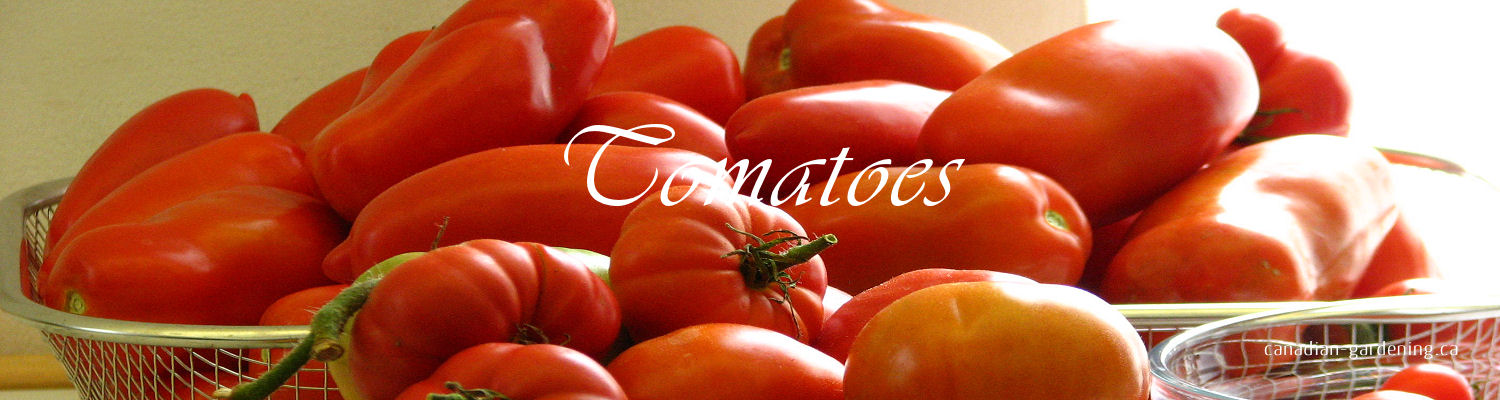
Grow Healthy Tomatoes (Solanum lycopersicum)
Determinate, Indeterminate and Growing Tips
Tomatoes are beloved for their vibrant colours, flavours, and versatility in the kitchen. I usually grow heirlooms so I can save my own seed. One winter I accidentally threw out some heirloom seeds that were a gift from a grandfather in Italy. Later, seedlings sprouted from the compost, reminding me — if you’re going to throw seeds out, compost them! :)
Tomato Cultivars I Grow
- Sauce Tomatoes: Great for sauces and cooking.
- Slicing Tomatoes: Perfect for fresh eating and sandwiches.
- Cherry Tomatoes: Mostly for personal enjoyment; they often self-seed.
Determinate vs Indeterminate Tomatoes
Determinate
The vines grow 1’-3’ long. The main stem and suckers also produce fruits. Once the flowers at the vine tips bloom, the plant stops growing. Perfect for containers or small spaces.
Indeterminate
Vines grow 6’-20’ long and produce clusters of flowers at every second leaf. They need staking or trellising and pruning for optimal growth.
Planting Tomatoes
I usually plant tomato plants horizontally in the hole to encourage more roots along the stem. A couple handfuls of compost in the hole and a gentle “now grow” seems to help. :)
Spacing
- 1’ – 2’ if staking and pruning.
- 3’ – 4’ if letting tomatoes sprawl.
Sprawling Tomatoes
One year, I let the tomatoes sprawl because I was behind on staking. They still produced plenty, rooted new roots, and kept growing. The next year I installed wire fencing and pruned them properly. Lesson: sometimes plants do their own thing!
Tomatoes in Small Spaces
Tomatoes are easy to grow in containers — perfect for decks, patios, and balconies. Dwarf varieties like Tiny Tim or Pixie work well. All container tomatoes need full sun, plenty of water, and rich, well-drained potting soil.
Care and Growing Guidelines
Fertilizer
I use compost or worm tea throughout the season.
Watering
At least 1” of water per week if it doesn’t rain. In hot weather, water more. Avoid wetting foliage. When flowering starts, add more compost. When fruits appear, give additional worm tea.
Problems & Pests
One common pest is the tomato hornworm — a large green caterpillar with white stripes. If you see them, hand-pick and destroy.
Diseases
Last year, some plants wilted, likely due to Verticillium or Fusarium wilt. Always monitor plants and remove any diseased ones promptly.
Tomato Soil pH Guidelines
Tomatoes thrive best in slightly acidic to neutral soil. Maintaining the right pH helps them absorb nutrients efficiently and reduces the risk of diseases like blossom-end rot.
| Tomato Type | Preferred Soil pH (approx.) | Notes |
|---|---|---|
| Determinate (Bush) | 6.2 – 6.8 | Stops growing after flowering; good for containers or small spaces |
| Indeterminate (Vining) | 6.2 – 6.8 | Vines continue growing; stake or trellis for best results |
Why soil pH matters: Slightly acidic soil ensures tomatoes get the nutrients they need, produces healthier plants, and helps prevent common problems like blossom-end rot.
Quick Facts for Tomatoes
- Sunlight: Full sun, at least 6-8 hours daily.
- Watering: 1” per week, more during hot spells; avoid wetting foliage.
- Spacing: 1’-2’ for staking/pruning, 3’-4’ for sprawling.
- Fertilizer: Compost or worm tea; more during flowering and fruiting.
- Pests: Tomato hornworm — hand-pick if spotted.
- Container Tomatoes: Use well-drained, rich soil; full sun; dwarf varieties like Tiny Tim or Pixie work well.
Explore Other Pages
"Did you know!"
- Tomatoes are native to western South America — mainly Peru, Ecuador, and northern Chile.
- They were first cultivated by the Aztecs in Mexico around 700–500 BCE.
- Aztecs called them xitomatl (Nahuatl language), which roughly means “plump fruit.”
- When Spanish explorers arrived in the 1500s, they brought tomatoes back to Europe. At first, many Europeans thought they were poisonous, because tomatoes are part of the nightshade family.
- Over time, Italians, Spaniards, and others began cultivating them, and by the 1700s, tomatoes were common in Mediterranean cuisine.
Site support: Advertising helps support canadian-gardening.ca and keeps the site free for everyone.