🌿 New for 2026: Canadian Gardeners - Fall Chores
👉 - If you have the time to help me out - please share canadian-gardening.ca with friends. Thank you!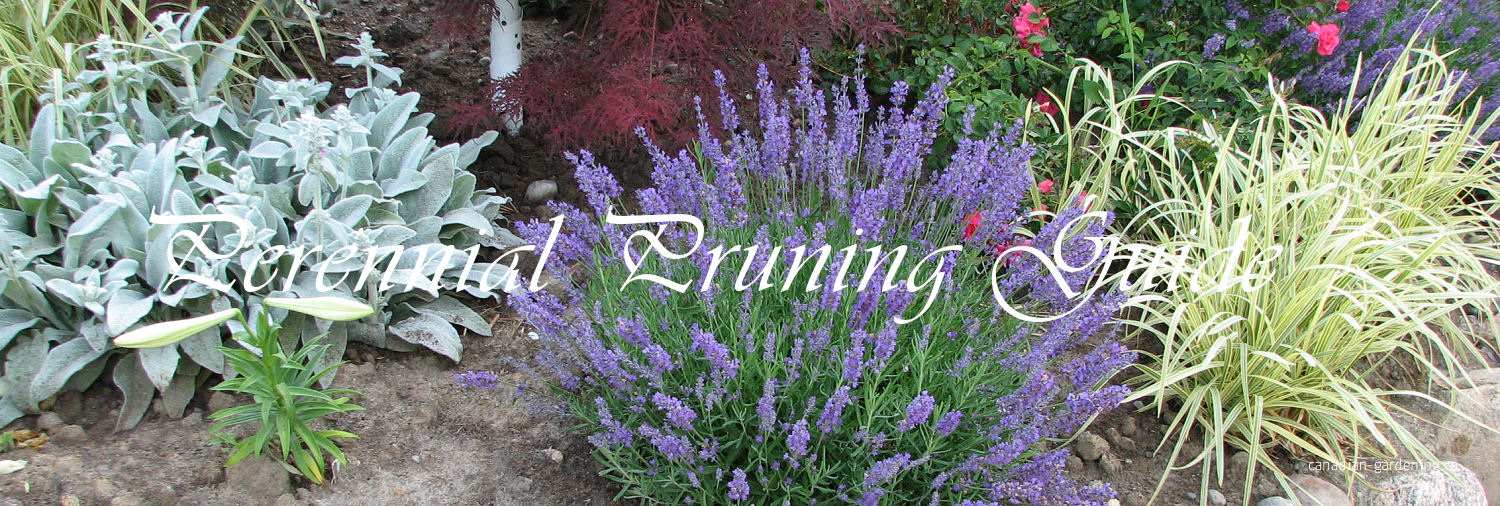
Perennial Pruning Guide
A simple, no-fuss pruning guide for real gardens
Not sure whether to cut back in fall or wait until spring? This guide shows you what to prune, when, and why.
Fall or Spring? The Simple Answer
Most hardy perennials don’t need perfect timing. A light tidy in fall followed by a deeper cleanup in spring works well for most Canadian gardens.
- Cut back diseased or messy plants in fall
- Leave sturdy stems for winter interest and birds
- Finish cleanup in early spring before new growth
- When in doubt, wait until spring — it’s the safest option
I do as much as I can, because then everything is neat and tidy in the spring. I leave some of my ornamental grasses. They don't reseed everywhere.
You might be removing flower buds for next year blooms like lilacs and forsythia.
Some plants are quite forgiving like lavender. If you forget to prune after blooming you can still prune in the spring to the new growth.
Canadian Perennial Pruning Cheat Sheet
| Perennial | When to Prune | Notes / Tips |
|---|---|---|
| Coneflowers (Echinacea) | Fall or Spring | Leave seed heads for birds if desired |
| Hostas | Fall | Cut to ground after frost |
Canadian Perennial Pruning Cheat Sheet
| Perennial | When to Prune | Notes / Tips |
|---|---|---|
| Coneflowers (Echinacea) | Fall or Spring | Leave some seed heads for birds; cut back in spring before new growth |
| Hostas | Fall | Cut down to ground after frost; reduces pests and disease |
| Peonies | Fall | Remove all foliage to prevent fungal issues |
| Day lilies | Fall or Spring | Trim leaves to 6–8” above soil; remove old flower stalks |
| Sedum (Autumn Joy / Stonecrop) | Spring | Leave fall blooms for winter interest; cut back before new growth |
| Phlox (Garden Phlox) | Fall or Spring | Cut lightly in fall; heavy pruning in spring if needed |
| Shasta Daisies | Fall | Deadhead spent flowers; cut stems before winter or wait until spring |
| Lavender | After Flowering | Cut back 1/3 after bloom; avoid cutting into old wood |
| Astilbe | Fall | Cut down to soil; leave crowns undisturbed |
| Bee Balm (Monarda) | Fall | Cut back to 2–3” above soil to reduce powdery mildew |
| Salvia | Fall or Spring | Cut spent blooms; hard prune in spring for bushy growth |
| Russian Sage | Spring | Cut back dead stems; protects crown over winter |
| Coral Bells (Heuchera) | Fall | Trim dead leaves; spring clean-up for shaping |
| Iris (Bearded) | After Bloom / Fall | Remove spent flower stalks; trim foliage to 6–8” |
| Rudbeckia (Black-eyed Susan) | Fall | Optional: leave for winter interest |
| Delphiniums | Fall or Spring | Cut after frost or in spring; watch for winter protection |
| Fall Bulbs (e.g., tulips, daffodils) | N/A | Plant in fall; leave foliage after bloom until yellowing |
| Roses | Early Spring | Depends on type; prune for shape and airflow |
| Hydrangea (Macrophylla) | After Flowering | Blooms on old wood; prune lightly after flowers fade |
| Hydrangea (Paniculata) | Early Spring | Blooms on new wood; prune to shape and encourage growth |
| Lilacs | After Flowering | Remove spent blooms; thin for airflow and shape |
| Forsythia | After Flowering | Remove old or crowded branches; encourages new growth |
Quick Tips
- When in doubt, wait until spring — safest option.
- Don’t cut plants that bloom on old wood in fall.
- Leave some seed heads for birds and winter interest.
- Clean tools to prevent disease spread.
Explore Other Pages
Site support: Advertising helps support canadian-gardening.ca and keeps the site free for everyone.